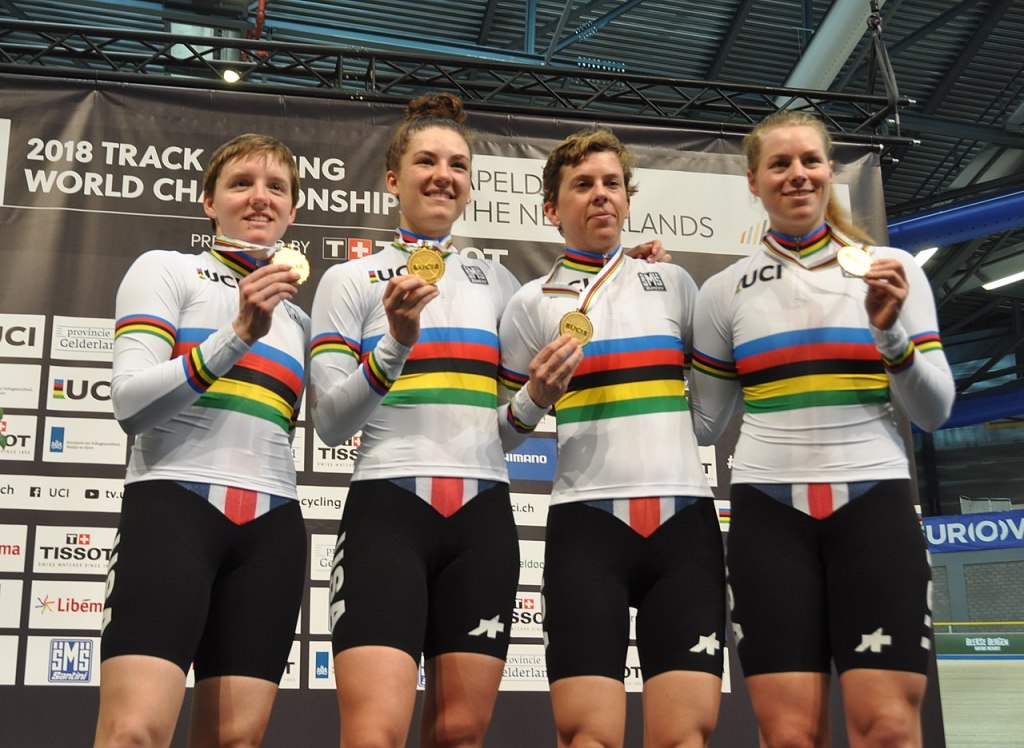
Originally submitted in Semester 1 2019 for the subject of Sports Reporting.
“After her concussion, she started embracing nihilism. Life was meaningless,” said Mark Catlin.
Mark Catlin is the father of Olympic silver medalist track cyclist Kelly Catlin who committed suicide in March.
The case has raised questions about the concussion in sport and its link to mental health while also bringing up the idea of automatic retirement for athletes who have suffered multiple concussions.
A study by researchers in North America concluded that people who have suffered a mild concussion are at a higher risk of commiting suicide.
Other cases have been similar to Kelly Caitlin’s case like Aaron Hernandez, a tight end for the New England Patriots in the NFL, who also committed suicide back in April 2017.
Concussions have been said to play a factor in Hernandez’s suicide and after his death researchers at Boston University found unusual holes in his brain.
Dr. Ann McKee, director of the CTE Center at Boston University says she is concerned about “accelerated” illness in sport.
“These are very unusual findings to see in an individual of this age,” McKee said.
Hernandez’s family unsuccessfully attempted to sue the NFL for not protecting him from multiple concussions.
These two cases show how multiple head injuries can be detrimental to people lives and how automatic retirement can help athletes receive the support and medical treatment they need before it is too late.
Many athletes have voluntarily retired for the game after learning about the effects of multiple concussion like John Urschel, an offensive lineman for the Baltimore Ravens in the NFL, who retired after three years at the top level of American Football after a study was released.
This study showed the link between head injuries and chronic traumatic encephalopathy, the brain disease which Hernandez was found to have.
Closer to home, Anthony Fainga’a, a former centre for the Wallabies, retired after his worry of number of head injuries he has sustained over his career.
“I’m probably only one more head knock away from being a vegetable or not being able to play with my kids,” Fainga’a said.
A class action is also brewing in the AFL from retired players who have suffered brain damage symptoms after playing in the sport.
This may also influence the league to change their concussion policy to help better manage and prevent head injuries in the game and sidelining players for longer who have suffered a concussion.
Concussion should be a higher priority in sport and better enforced as shown by a study by St Michael’s Hospital in Toronto which reviewed all head collisions in the 2014 FIFA World Cup.
It was shown that 16 percent of players that showed two or more signs of concussion were not assessed and 63 percent of players still played on after an assessment.
Although an article by Paul McCrory, Head of Traumatic Brain Injury Laboratory in Melbourne, says there is no scientific evidence that multiple concussions will result in permanent damage.
“Recent developments suggest that the risk of chronic traumatic encephalopathy in this setting may be largely genetically based rather than simply a manifestation of repeated concussive injury,” McCrory writes.
Automatic retirement may be a cruel punishment for athletes as retirement should be when the individual decides.
For the athlete, sport is their whole livelihood and maybe their only source of income but an automatic retirement would be in the best interest in the longevity of a person’s life.
Photo: UCI Track World Championships 2018 142 by Nicola available here and used under a Creative Commons Attribution. The image has not been modified.


 Hilman Hambali
Leave a comment